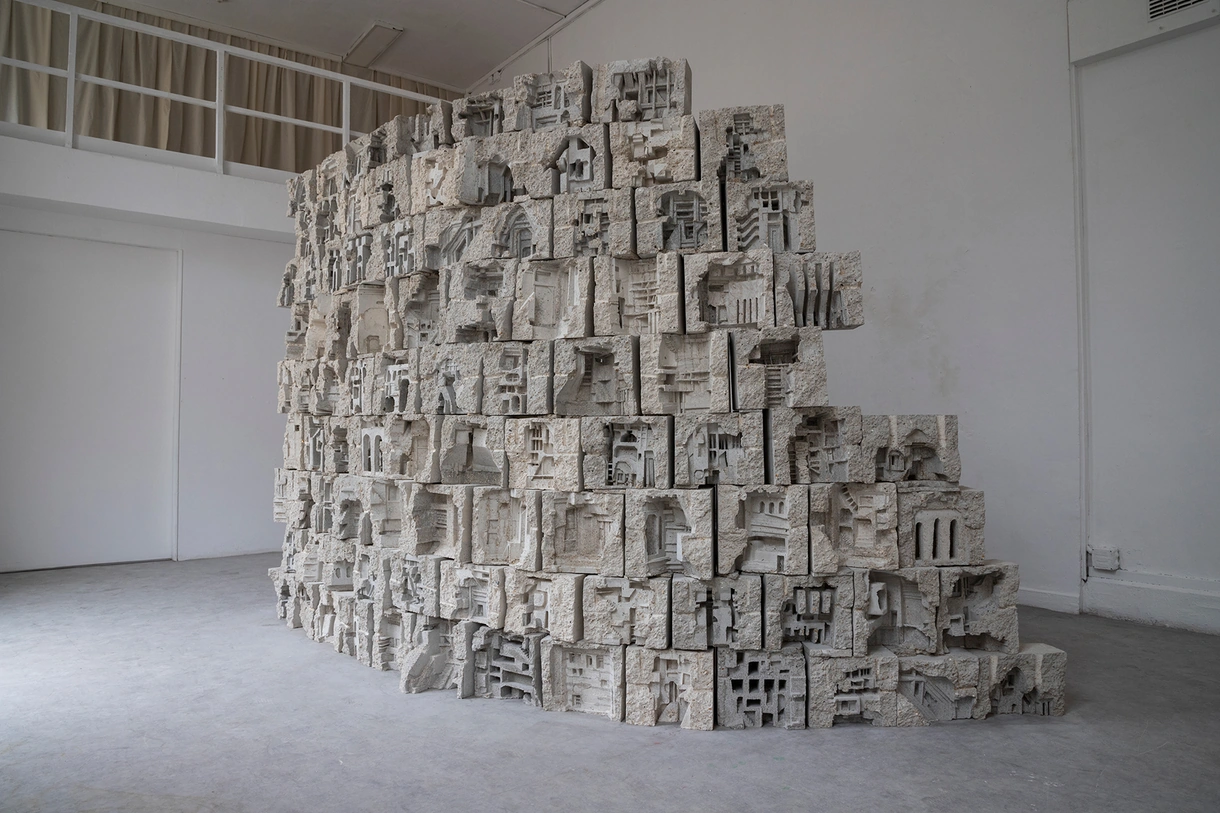
Concrete, 96 cells, 250 x 300 x 20 cm, Jules Goliath, 2021 © Florentine Charon
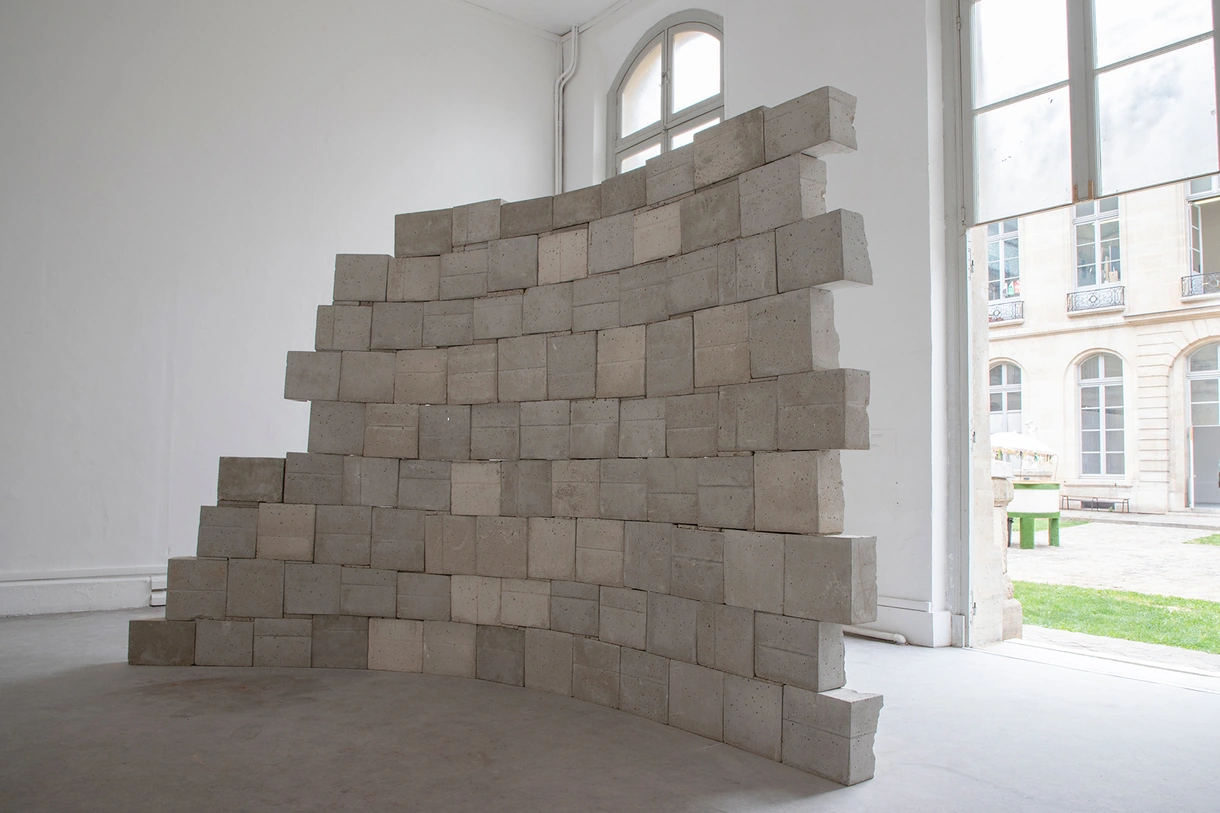
Rear view of the installation © Florentine Charon
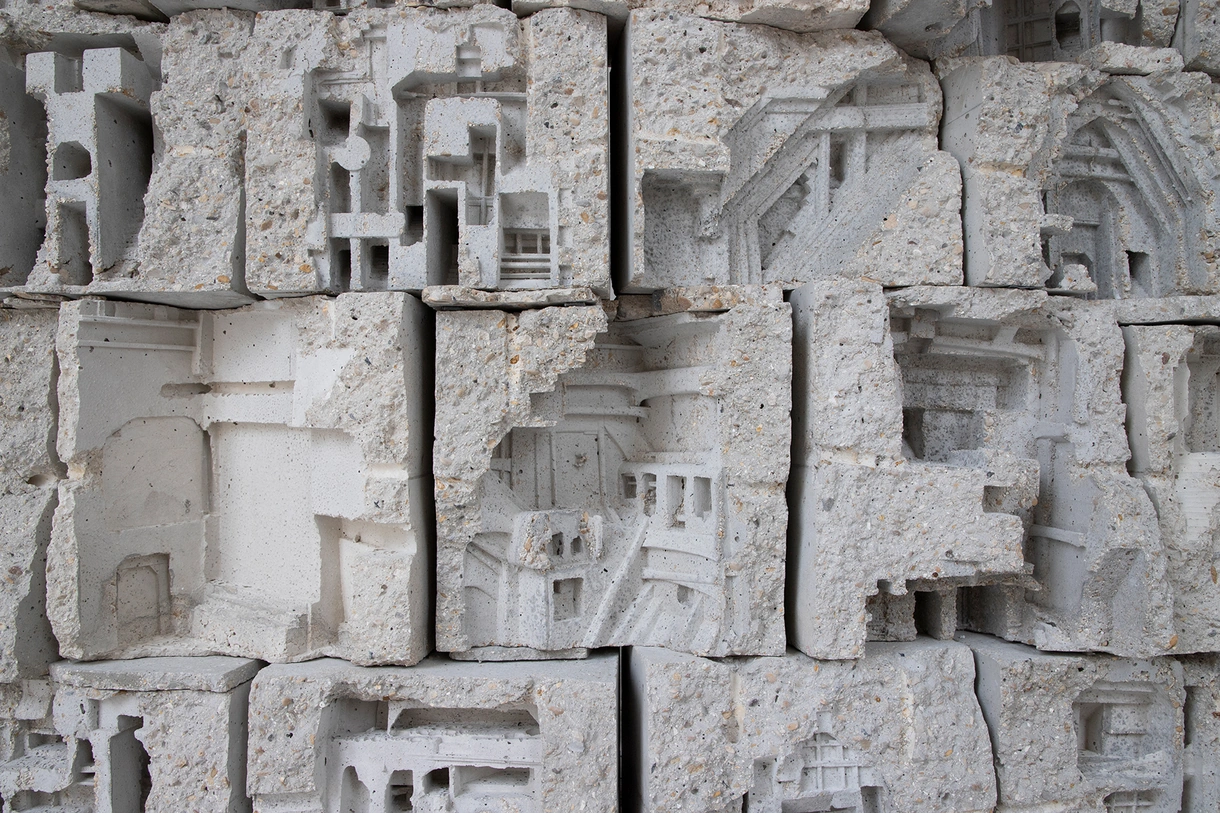
Cellular detail © Florentine Charon
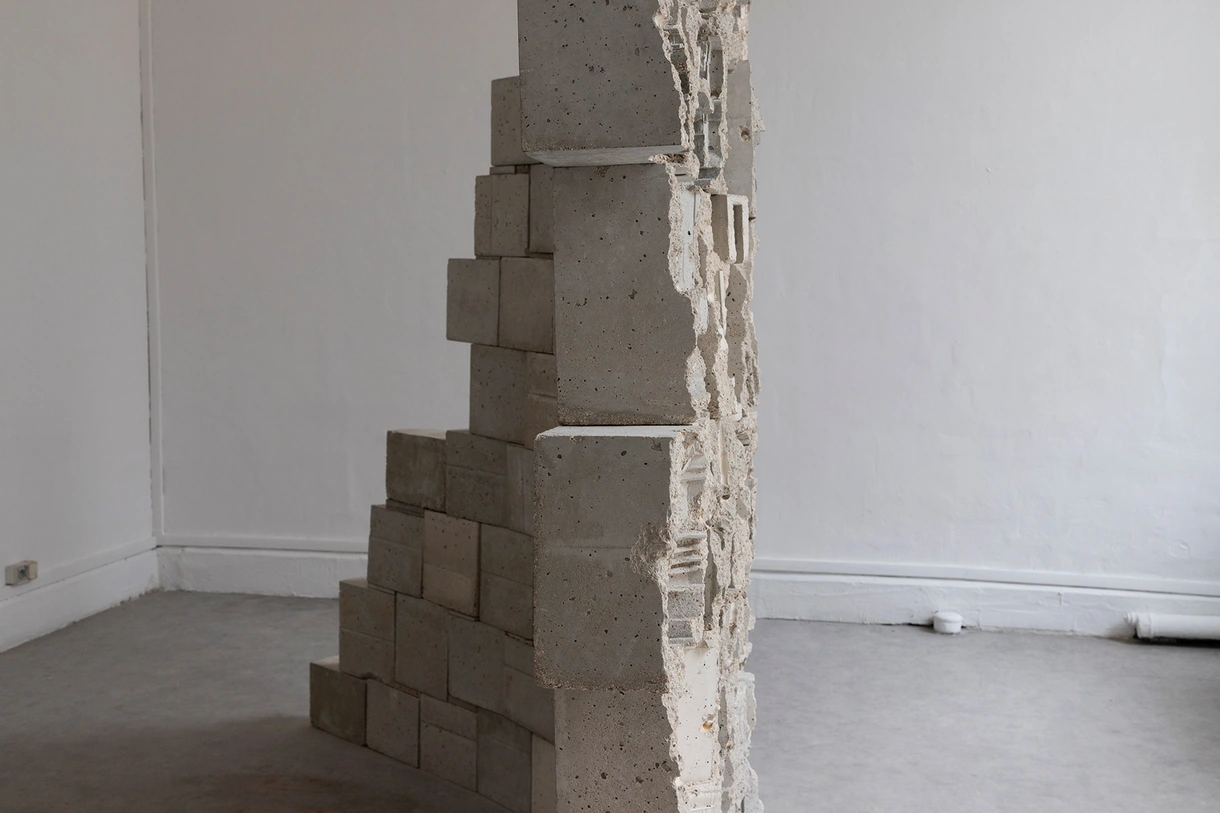
Side view © Florentine Charon
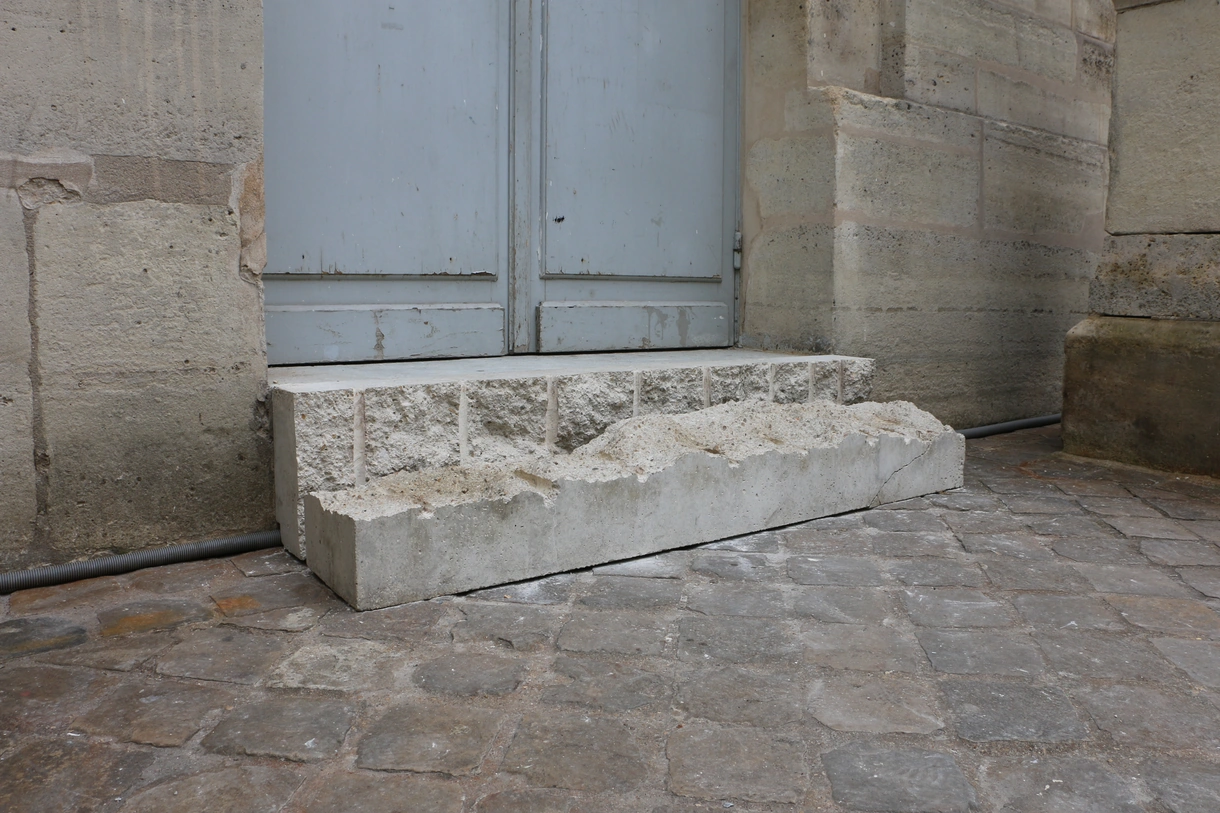
Threshold, Reinforced Concrete, 25 x 145 x 25 cm, 2021 © Florentine Charon
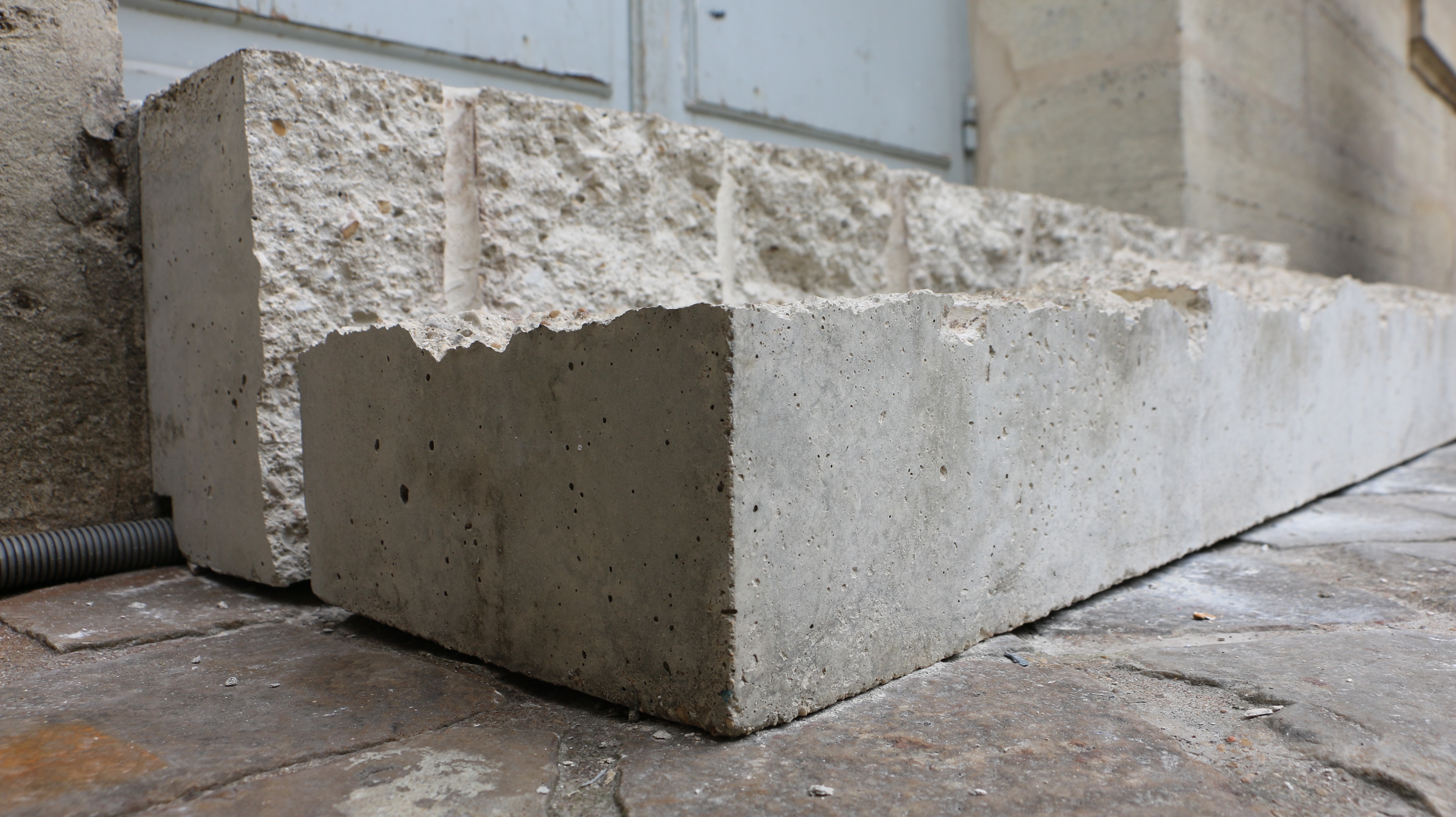
Detail © Florentine Charon
Cement is a paradoxical material. It represents both a guarantee of long-lasting solidity—a human engineering challenge against Time—and the possibility to freeze a precise, unique moment, a specific reality, in a hermetic capsule; to preserve a snapshot 'as is', forever.
This philosophical duality is one of the themes explored in the installation Fragmentale(intramuros) by Jules Goliath, featuring a curved, double-sided wall that greets us in the Vannier studio. Each large concrete cell takes on the status of a sculpted architectural landscape. Assembled without being sealed, merely placed together, the cells offer two distinct visual experiences. The 'interior' is smooth, with empty surfaces; it resembles a 'normal' wall. From the 'exterior', however, the cells are open, showcasing various architectural elements (arches, doors, staircases...) in a historically bare, timeless state. Molded and trapped in the concrete before being released by fracture, these traces of 'places' evoke both the imaginary ruins of Piranesi and Calvino's invisible cities. They invite reflection on the nature and function of 'ruin', echoing the dualities proposed by historian and archaeologist Alain Schnapp: 'Ruins are what remain from the tension between memory and oblivion, permanence and impermanence, works of culture and forces of nature.'
Makis Malafekas
This philosophical duality is one of the themes explored in the installation Fragmentale(intramuros) by Jules Goliath, featuring a curved, double-sided wall that greets us in the Vannier studio. Each large concrete cell takes on the status of a sculpted architectural landscape. Assembled without being sealed, merely placed together, the cells offer two distinct visual experiences. The 'interior' is smooth, with empty surfaces; it resembles a 'normal' wall. From the 'exterior', however, the cells are open, showcasing various architectural elements (arches, doors, staircases...) in a historically bare, timeless state. Molded and trapped in the concrete before being released by fracture, these traces of 'places' evoke both the imaginary ruins of Piranesi and Calvino's invisible cities. They invite reflection on the nature and function of 'ruin', echoing the dualities proposed by historian and archaeologist Alain Schnapp: 'Ruins are what remain from the tension between memory and oblivion, permanence and impermanence, works of culture and forces of nature.'
Makis Malafekas