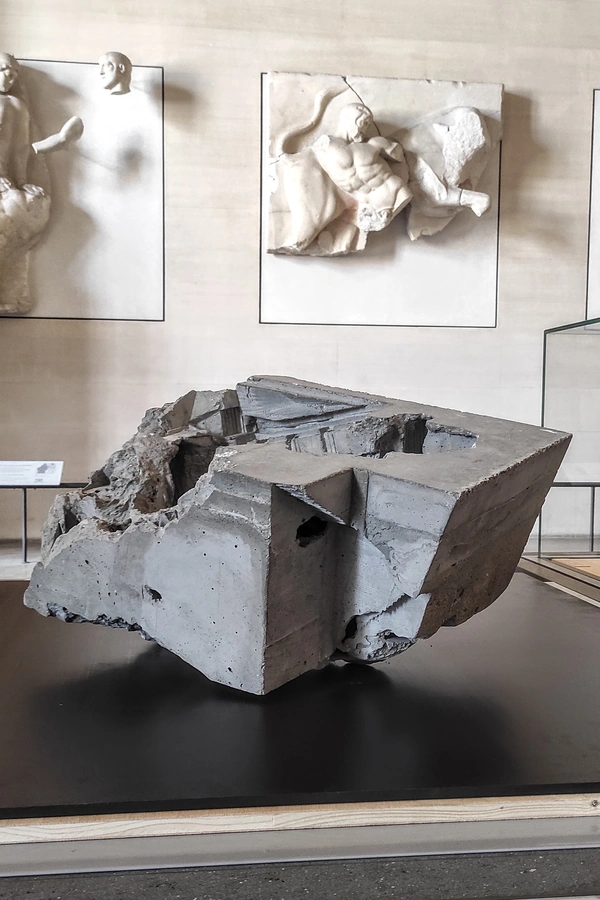
Ash concrete, 50×50×30 cm, 2022
Louvre Museum, Denon area , Olympian Zeus Temple room
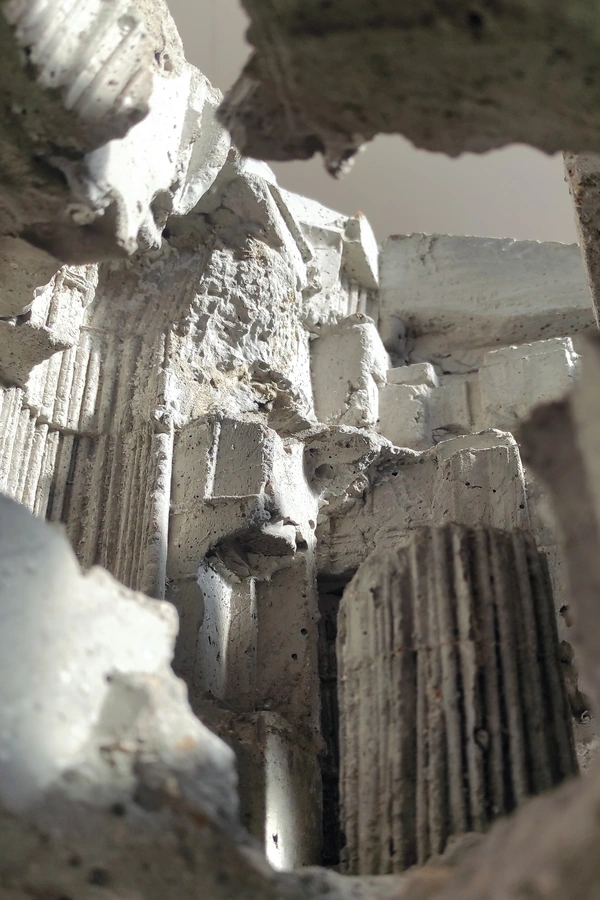
Ash concrete, 50×50×30 cm, 2022
Louvre Museum, Denon area , Olympian Zeus Temple room
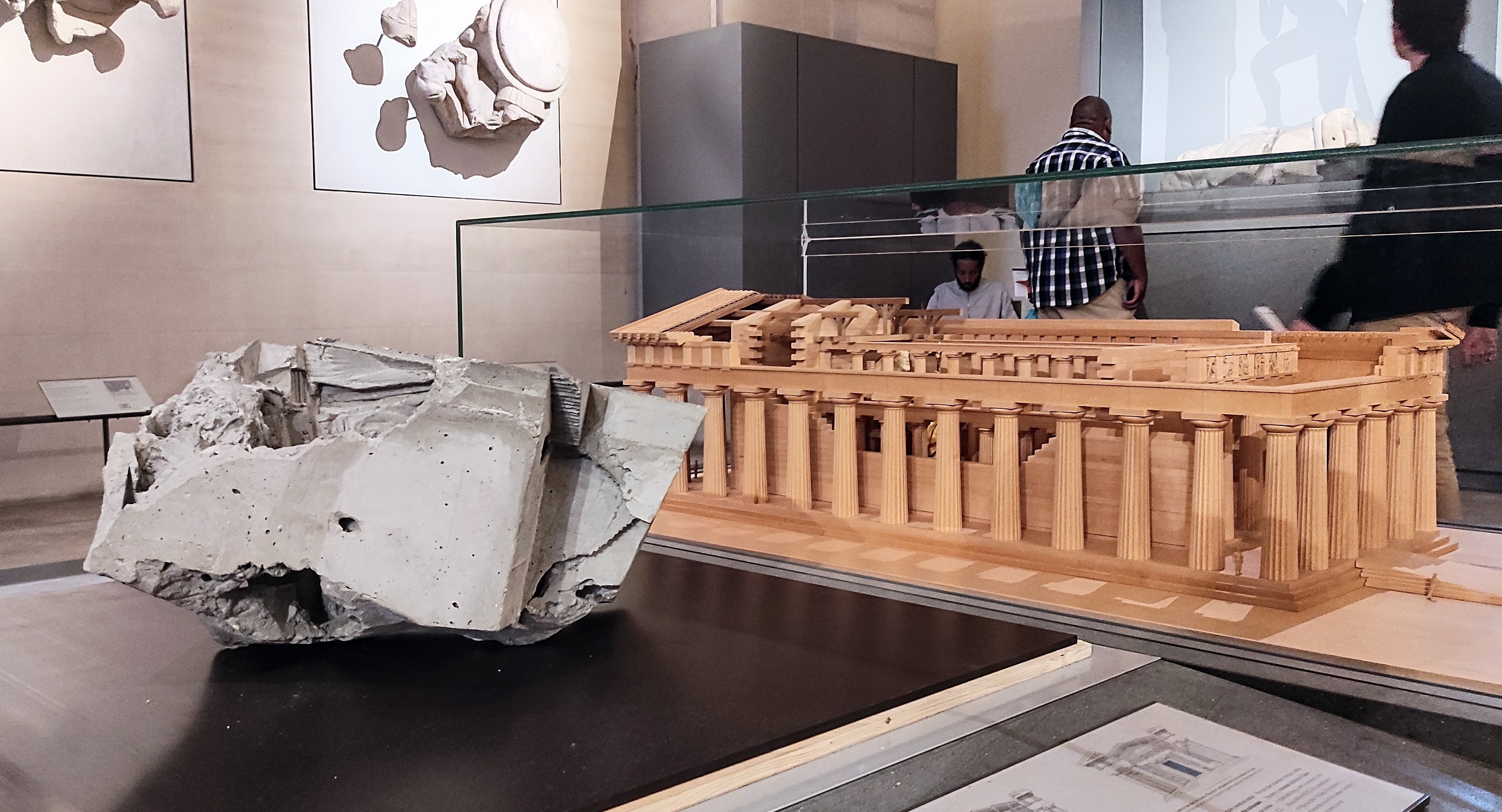
Ash concrete, 50×50×30 cm, 2022
Louvre Museum, Denon area , Olympian Zeus Temple room
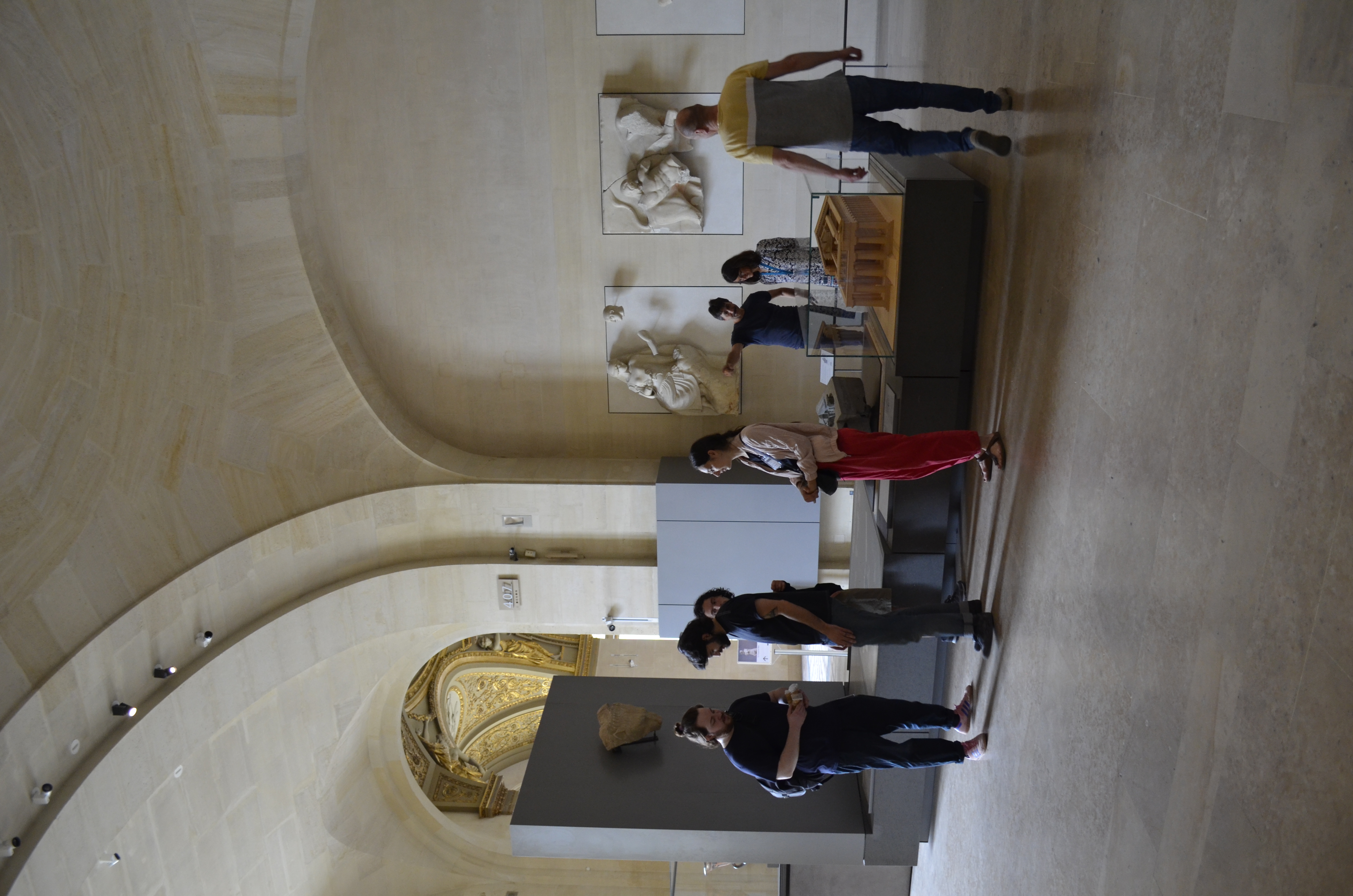
Ash concrete, 50×50×30 cm, 2022
Louvre Museum, Denon area , Olympian Zeus Temple room
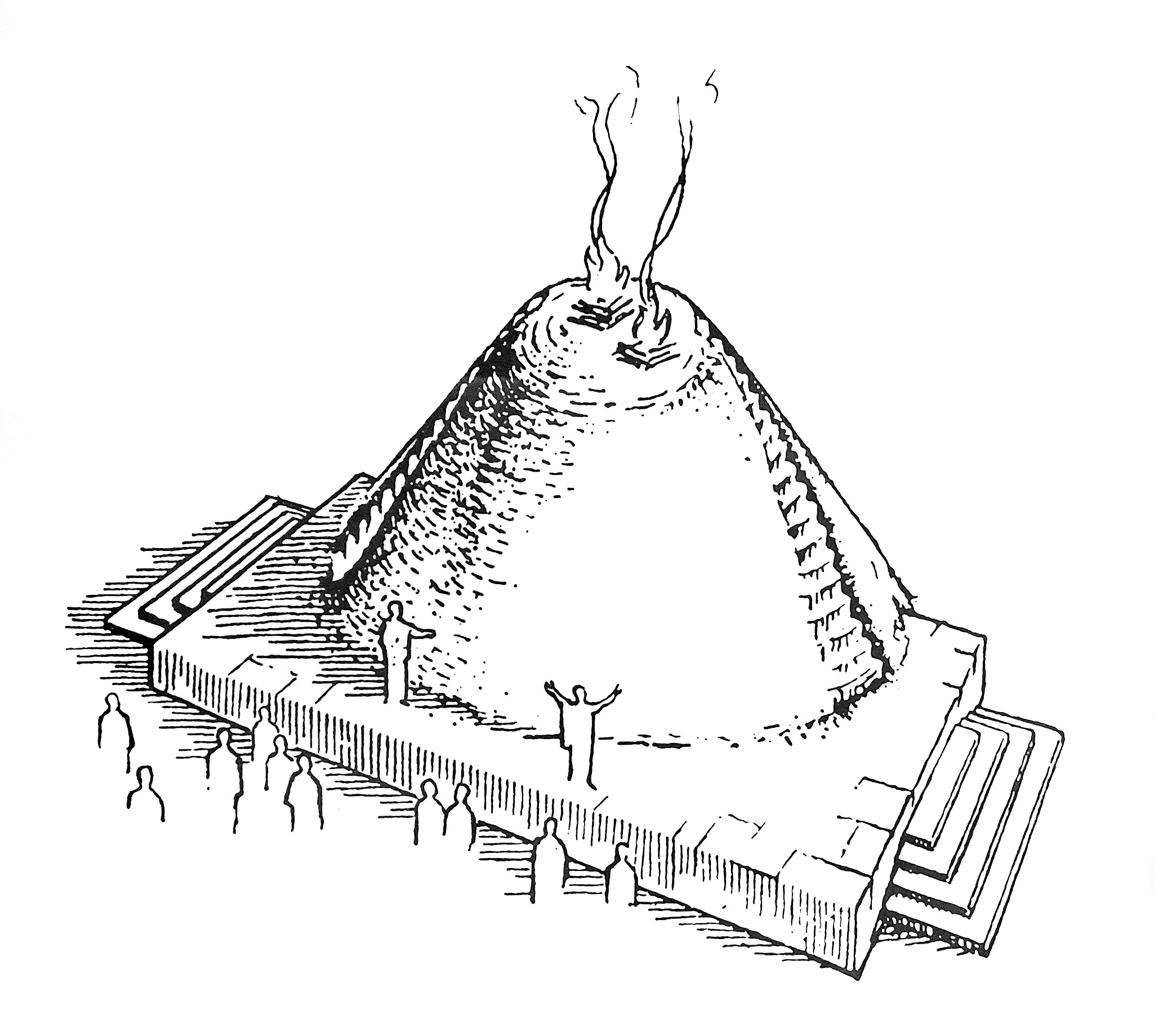
The Zeus Altar| © Davide Mauro, CC BY-SA 4.0
"The altar of Olympian Zeus lies approximately equidistant from the Pelopion and the sanctuary of Hera. [...1 It is made of accumulated ashes from the thighs of sacrificial victims, just like in Pergamon. The altar of Hera in Samos is also made of ashes and is in no way superior to those referred to in Attica as 'makeshift grills.' [...] Marble steps surround the base of the altar, while steps carved into the ash lead to its summit.
Pausanias, Description of Greece, Volume V, Book V: Elis, Chapter XIII, passages 8–10.
Standing in the room dedicated to the sanctuary of Zeus at Olympia, this concrete sculpture appears as a clustered architectural mass at a reduced scale. Inspired by the temple model built by Libon of Elis (circa 460 BCE) and its characteristic Doric architectural elements (crepis, columns, capitals, pediment, metopes, triglyphs), it reveals to the eye a landscape of reliefs, recesses, gaps, and architectural counter-forms embedded in the material. This work, born of fragmentation and reassembly, borrows from the aesthetics of ruins while depicting a fictitious relic that blends archaic and contemporary—even futuristic—forms. It evokes the sacred as summoned by the temple, placing these "remains" as objects of curiosity among the Antiquities.